Whole-House Water Filter Guide: When It Helps and When It Does Not

Water Filter Guide

By Anna Persson

Whole-House Water Filter Guide: When It Helps and When It Does Not

How whole-house water filters work, when to use them for sediment, chlorine taste, scale and well water, and when you still need a kitchen-tap filter.

Install & Maintenance

Quick answer: Whole-house filters are best for home-wide sediment, chlorine taste, odor, scale management, and some well-water treatment plans. They are not automatically the best answer for lead, PFAS, nitrate, arsenic, or drinking-water claims at the kitchen tap.

Best for

Homeowners comparing main-line filtration for every tap, shower, appliance and fixture.

Wrong fit

Renters or apartment buyers who need a simple point-of-use filter.

Tradeoff

Whole-house improves the whole home, but specific drinking-water contaminants may still need point-of-use treatment.

Whole-house is about the house, not just the glass

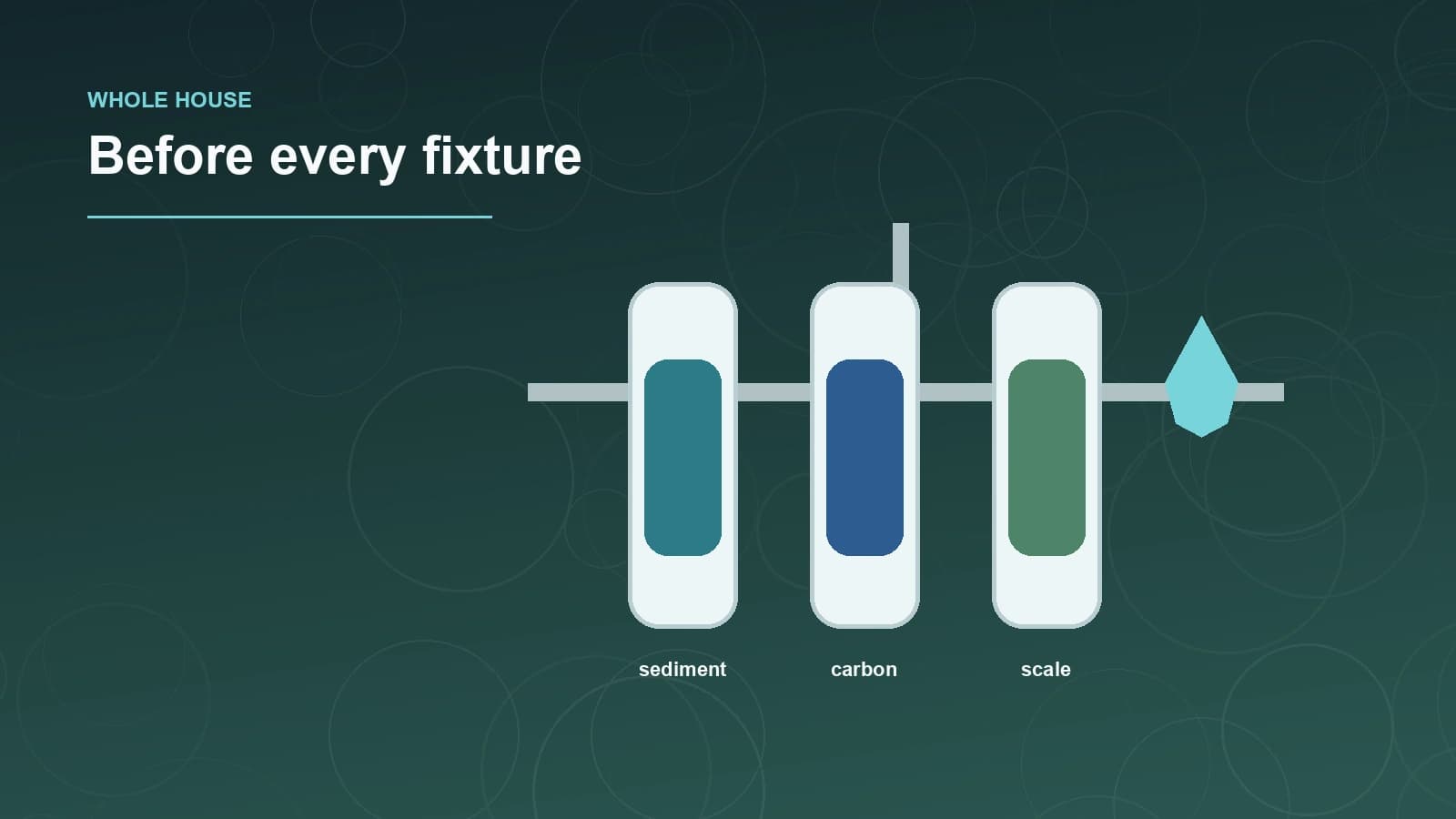
A whole-house system treats water as it enters the home. That can improve showers, laundry, sediment, appliance protection, chlorine taste, and scale-related issues. It can also be expensive, space-hungry, and misunderstood.

The first question is not "which brand is best?" It is "what are we treating before the water splits to every fixture?"

When whole-house makes sense

Whole-house is worth comparing when:

  • Sediment or rust appears at multiple taps.
  • Chlorine taste or odor affects showers and fixtures.
  • Hardness or scale is a home-wide problem.
  • Well water needs a staged treatment plan.
  • You want appliance and plumbing protection.
  • You have space near the main line and a budget for install.

When whole-house is not enough

Whole-house systems are often oversold for drinking-water contaminants. A main-line carbon tank may improve taste, but it may not be the best certified answer for lead, PFAS, nitrate, arsenic, fluoride, or kitchen-tap claims.

Many households need a stack:

  • Whole-house sediment or carbon for the home.
  • Under-sink carbon or RO for drinking and cooking.

City water vs well water

City-water whole-house systems usually focus on chlorine, sediment, taste, odor, and scale management.

Well-water systems require testing first. Iron, manganese, sulfur odor, bacteria, nitrate, arsenic, hardness, pH, and sediment can all change the treatment train.

Do not buy a generic well-water system before testing.

Brands to compare

SpringWell is a serious direct-to-consumer whole-house comparison, especially for homeowners who want a packaged system.

Pentair is a broader water-treatment company with a more traditional residential filtration footprint.

Aquasana also belongs in the comparison if you want a consumer-friendly whole-house brand plus point-of-use options.

Install realities

Check:

  • Main-line access and space.
  • Drain needs.
  • Pressure drop.
  • Bypass valve.
  • Filter or media replacement requirements.
  • Pre-filter access.
  • Local plumbing code.
  • Whether the system handles your measured contaminant.

Whole-house systems are not the place to guess.

Frequently Asked Questions

Does a whole-house filter remove lead?

Some systems may have lead claims, but lead often comes from plumbing near the tap. For lead, verify a point-of-use lead reduction claim unless your whole-house plan is designed and verified for that problem.

Do I need whole-house and under-sink?

Often, yes. Whole-house handles the home-wide problem; under-sink handles drinking-water claims.

Is whole-house reverse osmosis common?

Whole-house RO exists, but it is more complex and expensive than normal point-of-use RO. It is not the default home solution.

Should well owners test first?

Yes. Well treatment depends on the lab result. Guessing can lead to the wrong system and unresolved health concerns.

Sources

Methodology

These guides are built from manufacturer documentation, public specifications, primary research where health claims matter, and repeated buyer questions that show up in real ownership and installation decisions.

Manufacturer responses can clarify pricing bands, warranty terms, support footprint, or common mistakes. They do not move a page up the shortlist on their own.

Next Step

What to do next

Use one of these three paths. They are here to move the decision forward, not add more noise.

Want the full buyer path in your inbox? We send the short version.

Related Guides