Author

Anna Persson

Writer and buyer guide editor

Editorial focus

Anna Persson writes Water Filter Guide's buyer-facing and educational pages. Her work focuses on turning water reports, certification claims, and ownership costs into clear buying decisions.

How she works

Her pages are built from manufacturer documentation, public specifications, recognized certification resources, public health guidance where relevant, and repeated buyer pain points from real-world ownership stories.

Why this matters

The goal is simple: make the next decision clearer, cut the marketing noise, and say when the wrong filter type is still the wrong answer even if the brand is good.

Written by Anna Persson

Guides

Whole-House Water Filter Guide: When It Helps and When It Does Not
2026-07-05Install & Maintenance

Whole-House Water Filter Guide: When It Helps and When It Does Not

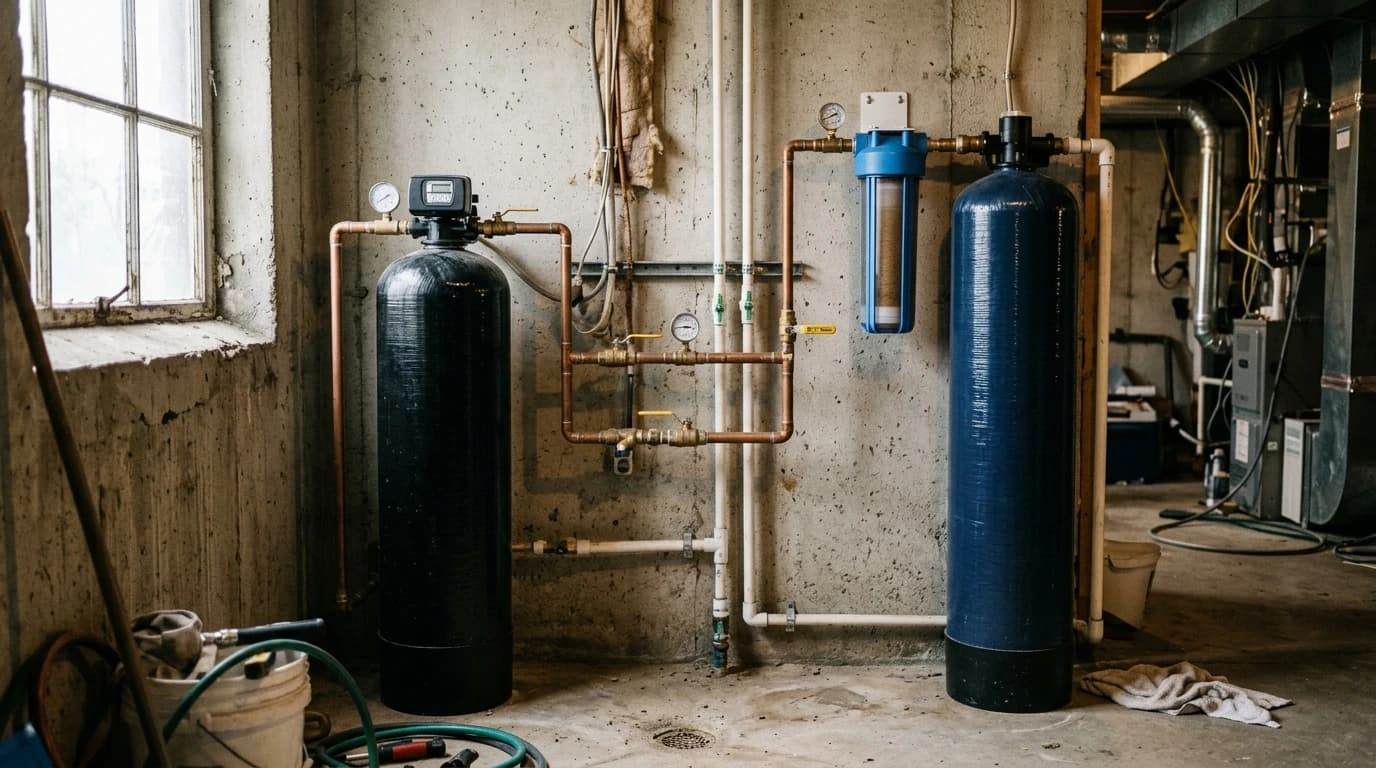
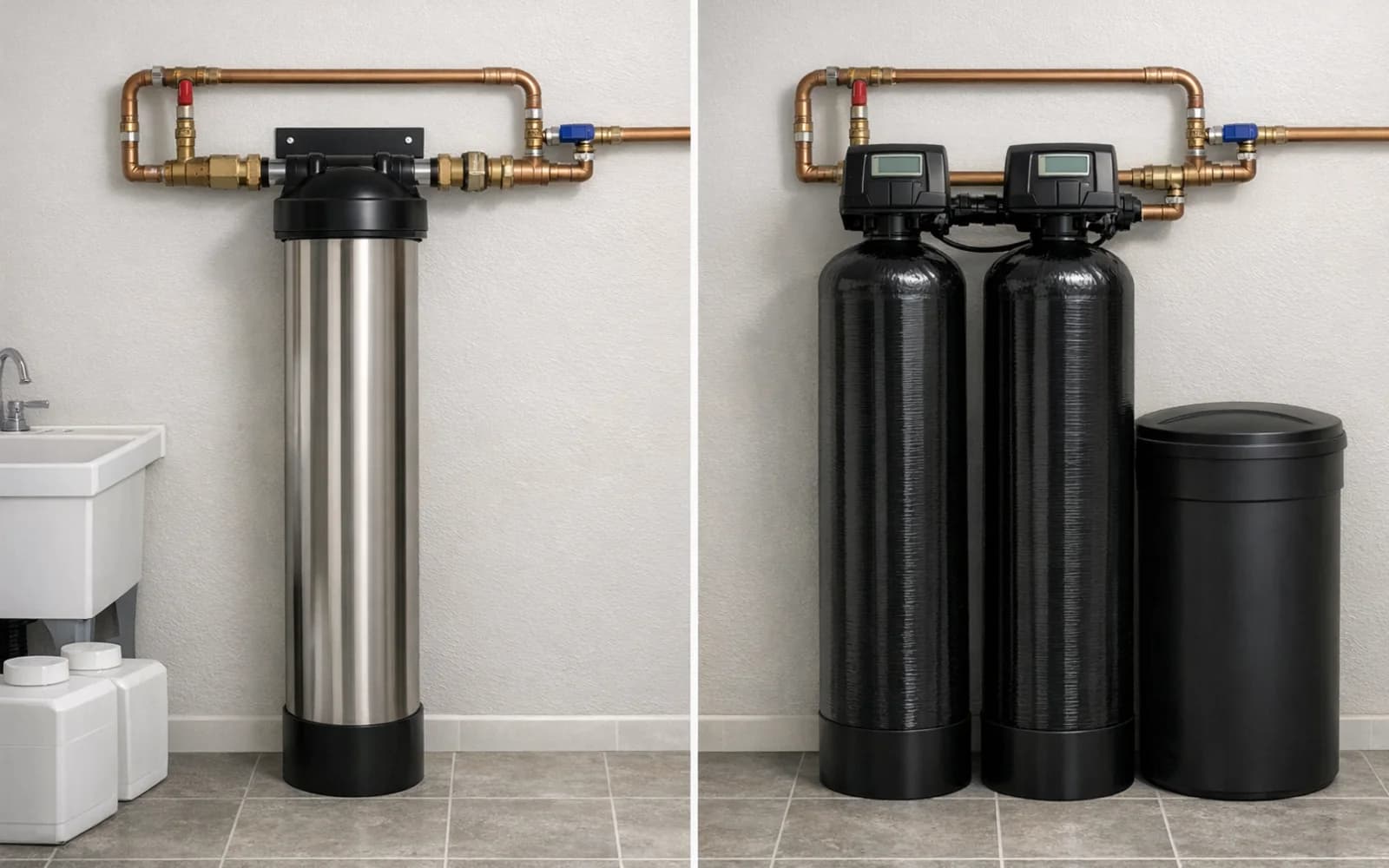
How whole-house water filters work, when to use them for sediment, chlorine taste, scale and well water, and when you still need a kitchen-tap filter.

Quick answer: Whole-house filters are best for home-wide sediment, chlorine taste, odor, scale management, and some well-water treatment plans. They are not automatically the best answer for lead, PFAS, nitrate, arsenic, or drinking-water claims at the kitchen tap.

whole-housewell watersedimentinstallation
Water Filter Types: What Each One Removes (Micron & NSF)
2026-07-05Filter Type

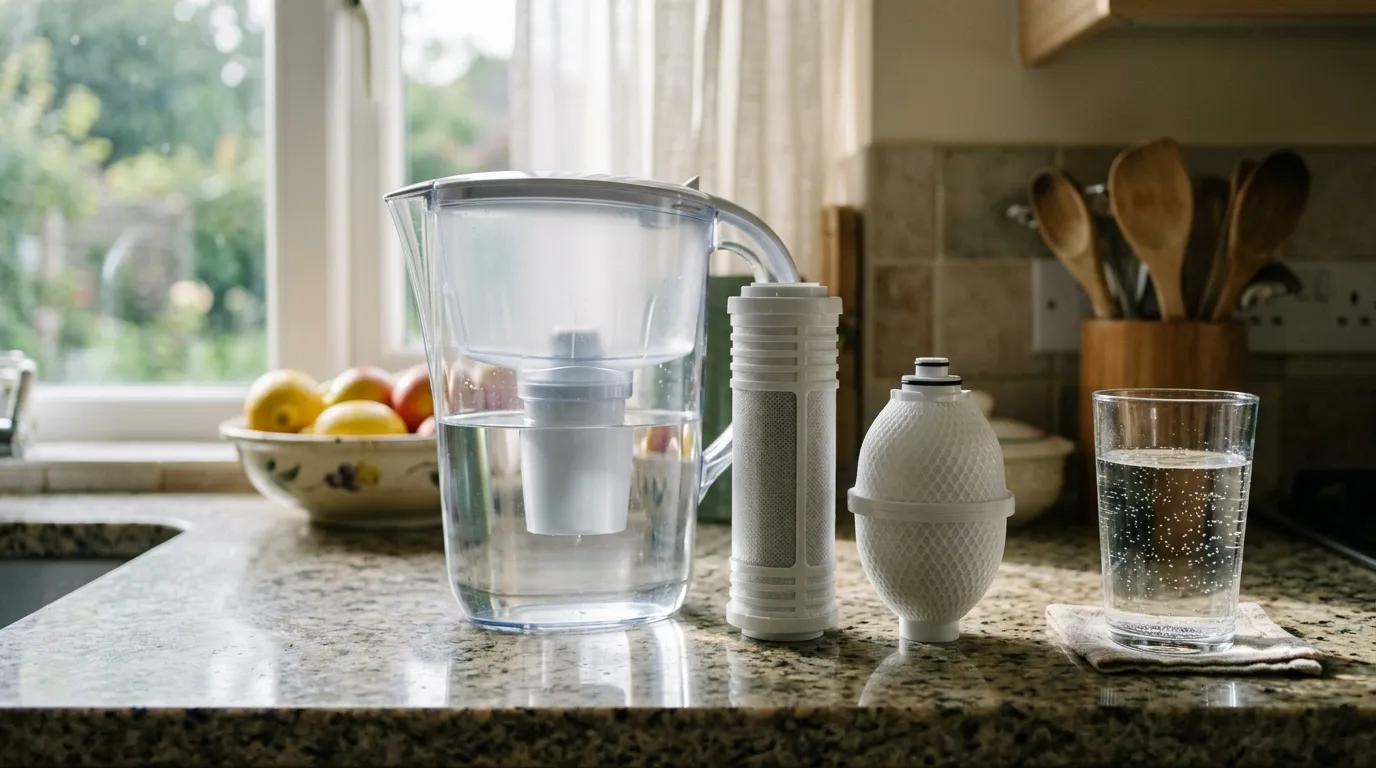
Water Filter Types: What Each One Removes (Micron & NSF)

A plain comparison of sediment, carbon block, reverse osmosis, UV, ion-exchange softeners, and whole-house filters, with what each removes, typical micron ratings, and the NSF/ANSI standard that backs the claim.

Quick answer: No single filter removes everything. Sediment filters catch particles by micron size, carbon reduces chlorine and many chemicals, reverse osmosis handles dissolved solids like nitrate and arsenic, UV inactivates microbes, and softeners exchange hardness ions. Match the filter to your water report, then confirm the exact model carries the right NSF/ANSI certification.

filter typesmicron ratingNSFsedimentreverse osmosis
Water Filter Problems: Low Pressure, Bad Taste, Leaks
2026-07-05Install & Maintenance

Water Filter Problems: Low Pressure, Bad Taste, Leaks

A symptom-to-fix guide for common water filter problems: low water pressure, bad taste or odor after install, leaks at fittings, slow reverse osmosis fill, and when to change each filter stage.

Quick answer: Most water filter problems trace back to a clogged cartridge, a fitting that needs resealing, or a filter left in past its interval. Low pressure usually means a clogged filter or spent RO membrane. Bad taste after install is normal carbon dust that flushes out. Leaks are almost always the o-ring or thread seal.

troubleshootingmaintenancereverse osmosisinstallationfilter replacement
Water Filter Certifications: NSF, ANSI, WQA and IAPMO Explained
2026-07-05Contaminants

Water Filter Certifications: NSF, ANSI, WQA and IAPMO Explained

How to read water filter certification claims, what NSF/ANSI 42, 53, 58, 401 and 372 mean, and why the exact model number matters.

Quick answer: A standard number is not enough. Verify the exact model, contaminant claim, and certifying body. NSF/ANSI 42 is mostly aesthetic; 53 covers many health-related claims; 58 is reverse osmosis; 401 covers some emerging compounds; 372 covers lead-free materials.

certificationsNSFANSIWQAIAPMO
Water Filter Buying Guide: The Decision Path Before You Spend Money
2026-07-05Final Decision

Water Filter Buying Guide: The Decision Path Before You Spend Money

A complete water filter buying guide for 2026: read your water report, choose carbon vs reverse osmosis vs whole-house, verify certifications, compare brands, and calculate replacement cost.

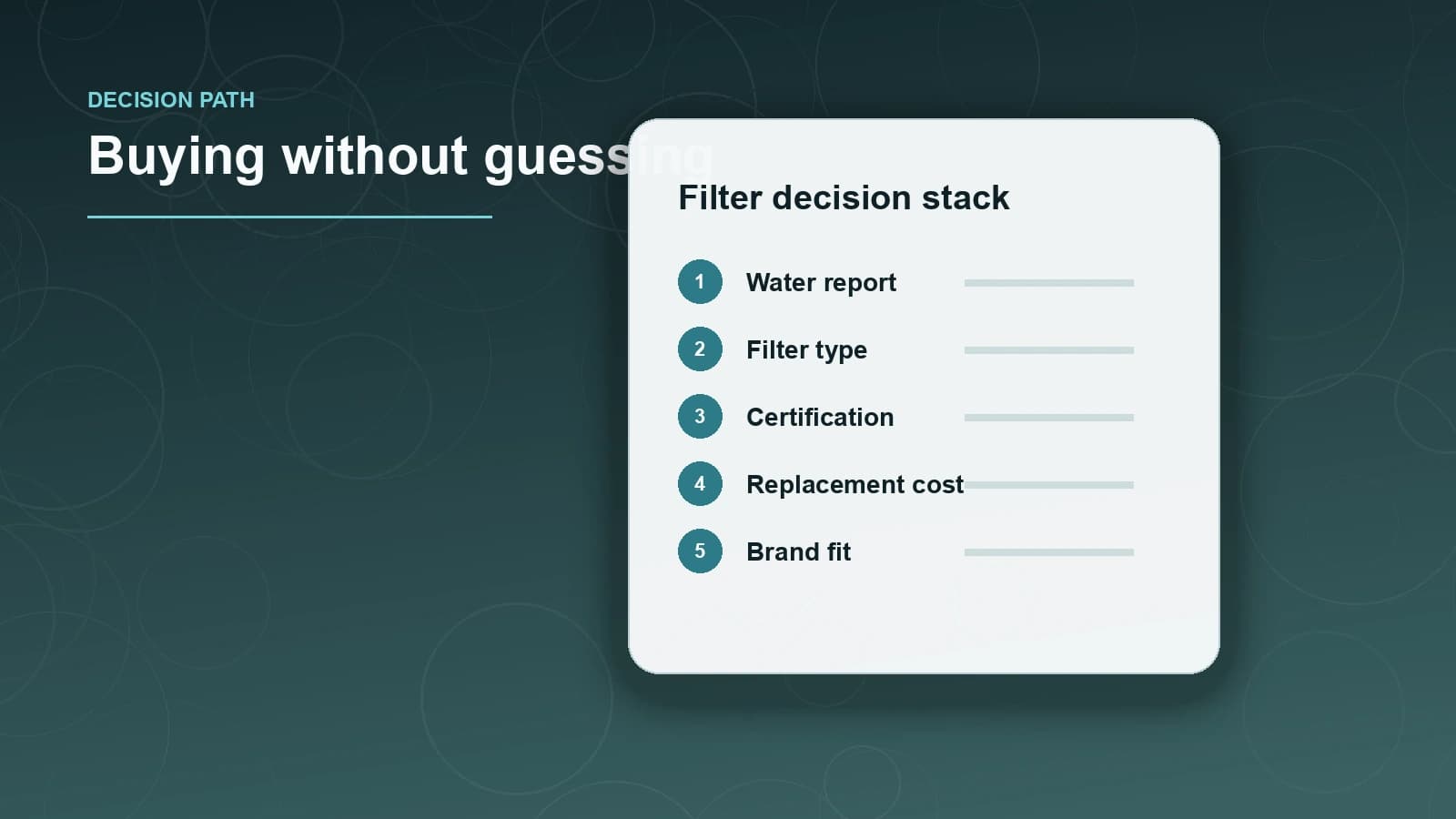
Quick answer: Buy in this order: identify the contaminant, choose the filter type, verify the exact model's certified claim, calculate first-year and replacement cost, then compare brands.

buying guidecertificationsbrandscost
Under-Sink Water Filter Guide: Carbon, RO, Space and Replacement Costs
2026-07-05Install & Maintenance

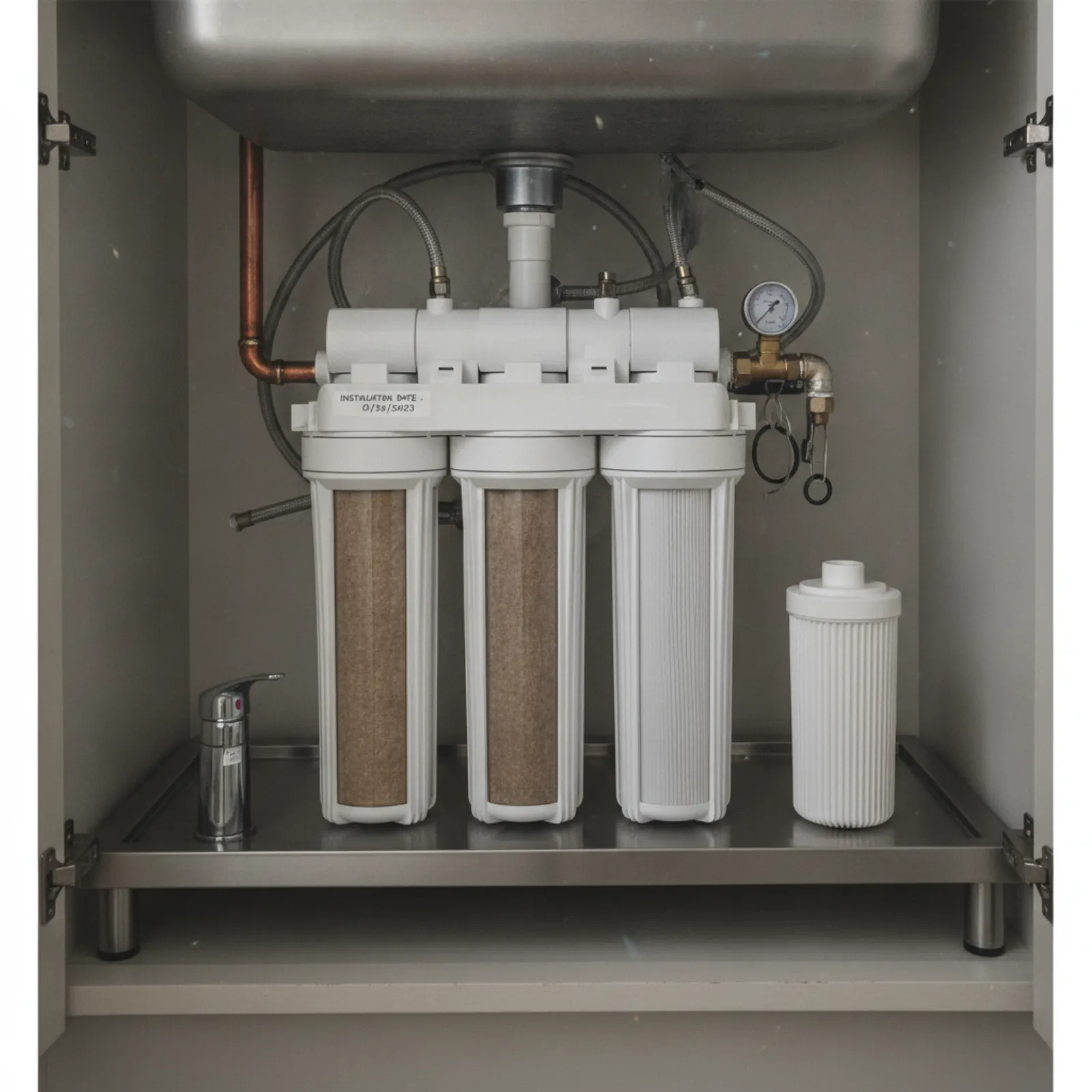
Under-Sink Water Filter Guide: Carbon, RO, Space and Replacement Costs

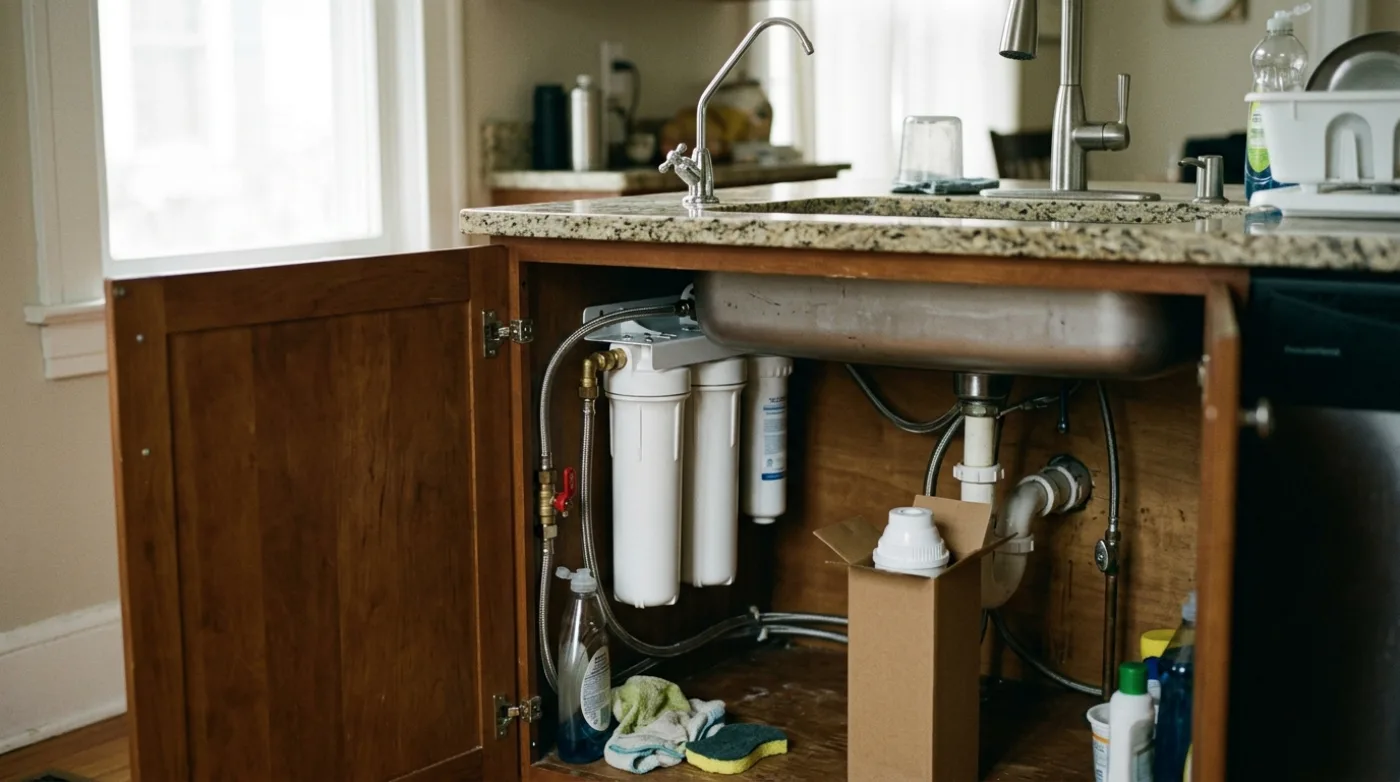
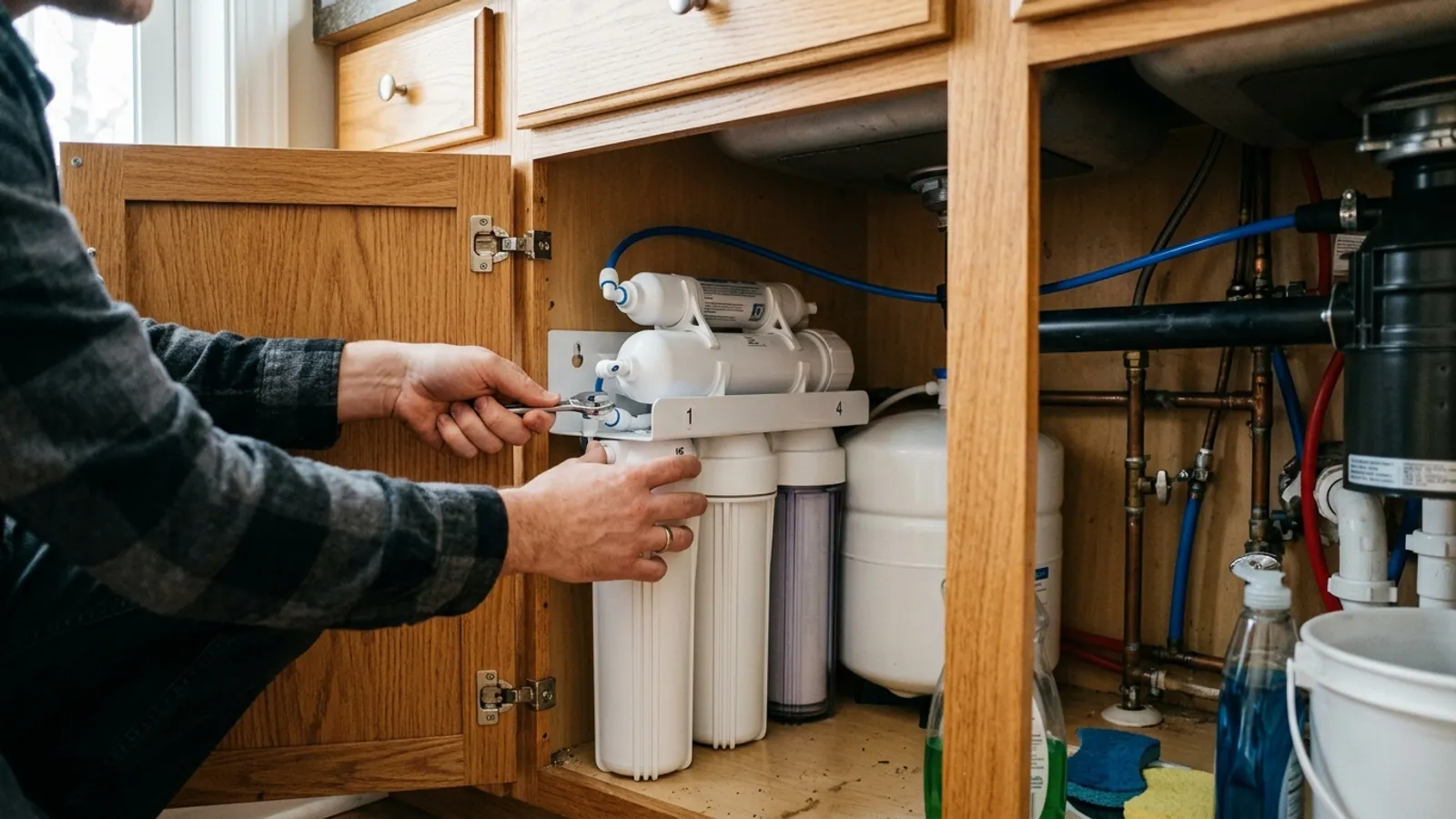
How to choose an under-sink water filter, including carbon vs reverse osmosis, cabinet space, faucet holes, flow rate, certifications, and replacement filters.

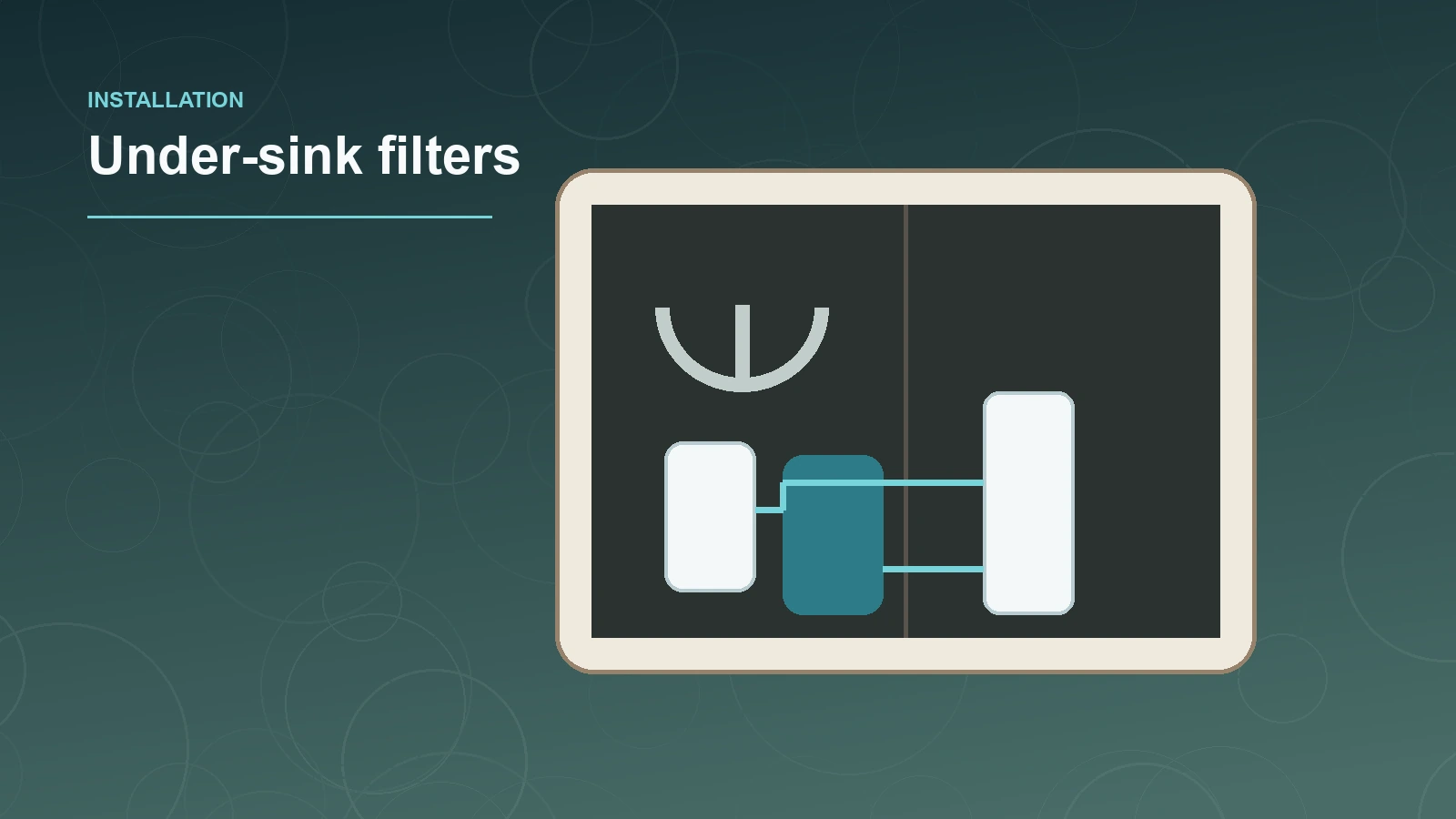
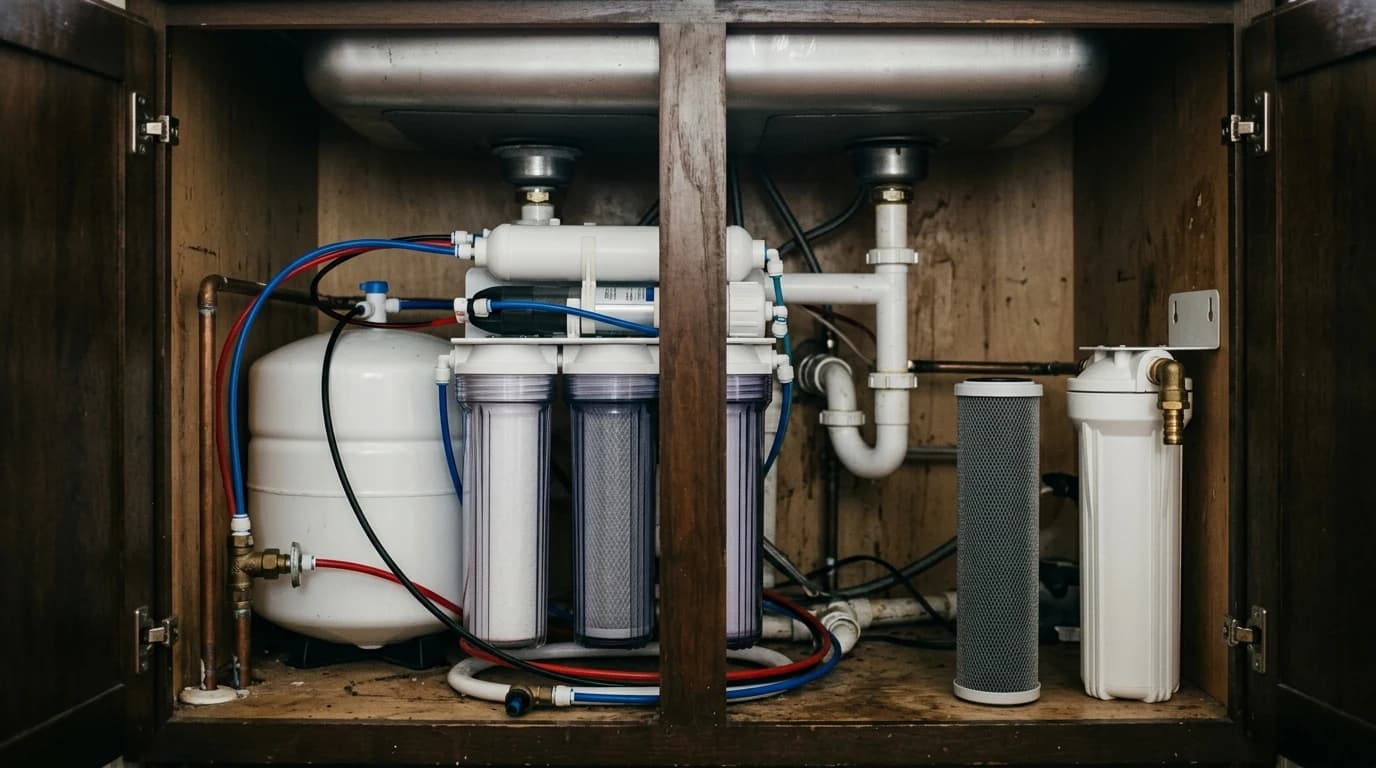
Quick answer: Choose under-sink carbon for certified city-water taste, lead, PFAS or VOC claims with simpler ownership. Choose under-sink RO when nitrate, arsenic, fluoride, high TDS or broad dissolved solids matter.

under-sinkinstallationcarbonreverse osmosis
Reverse Osmosis vs Carbon Filter: Which One Do You Actually Need?
2026-07-05Filter Type

Reverse Osmosis vs Carbon Filter: Which One Do You Actually Need?

A plain-English comparison of reverse osmosis and carbon filters for lead, PFAS, chlorine taste, nitrate, arsenic, fluoride, TDS, cost, maintenance and installation.

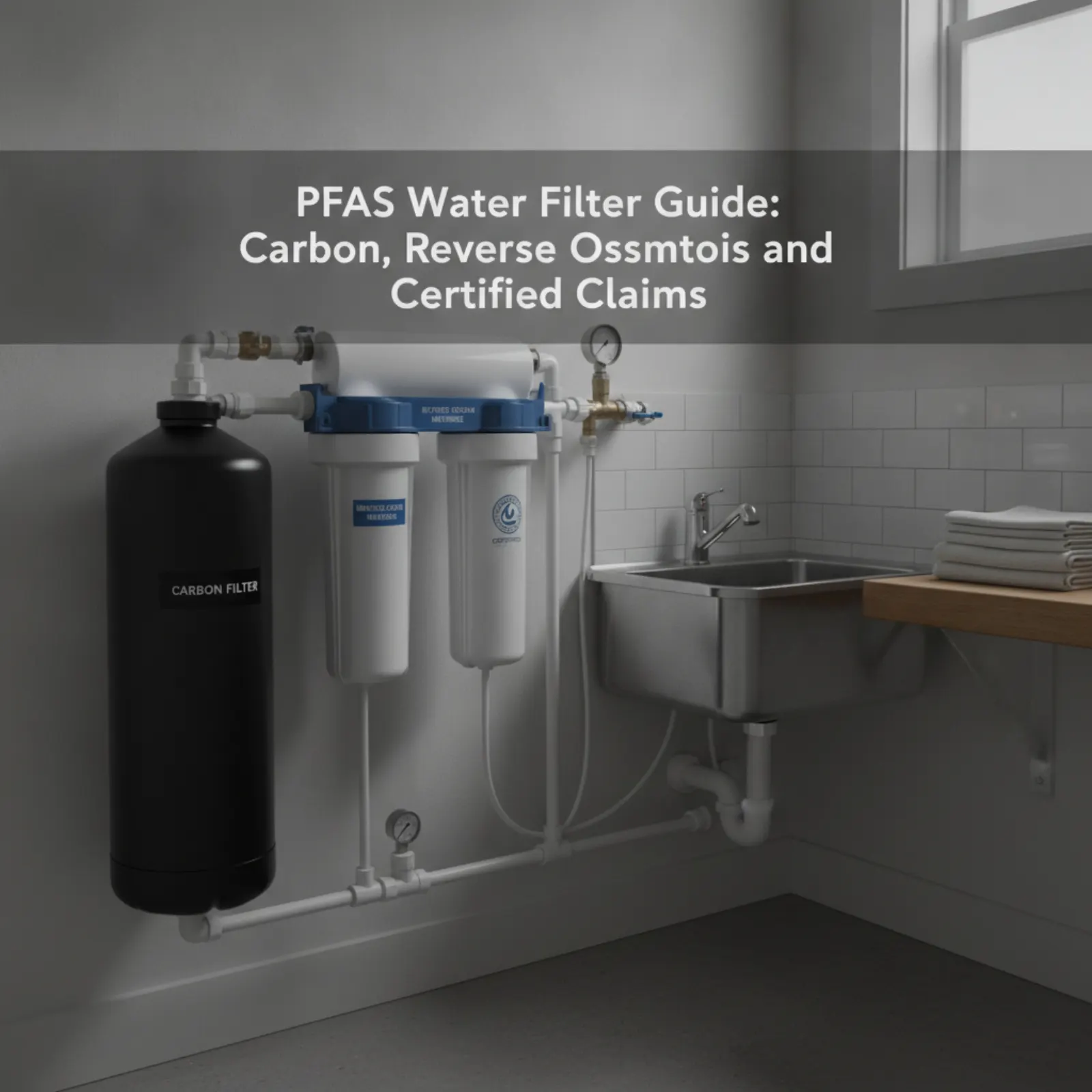
Quick answer: Use carbon for taste, odor, chlorine, many VOCs, lead and PFAS when the exact model is certified. Use reverse osmosis when nitrate, arsenic, fluoride, high TDS, or broad dissolved solids are the reason you are filtering.

reverse osmosiscarbon filterfilter typescomparison
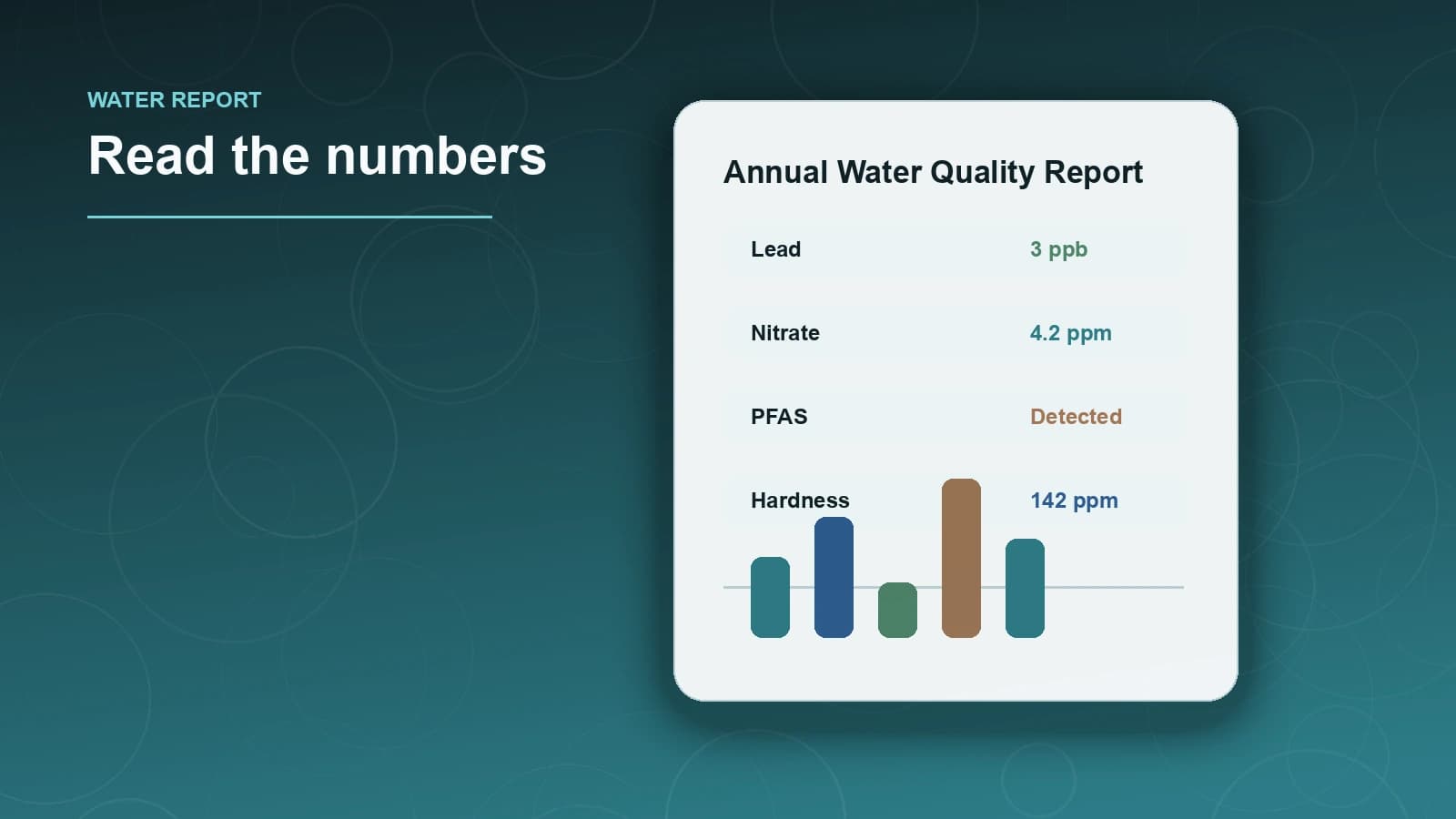
How to Read Your Water Quality Report Before Buying a Filter
2026-07-05Water Report

How to Read Your Water Quality Report Before Buying a Filter

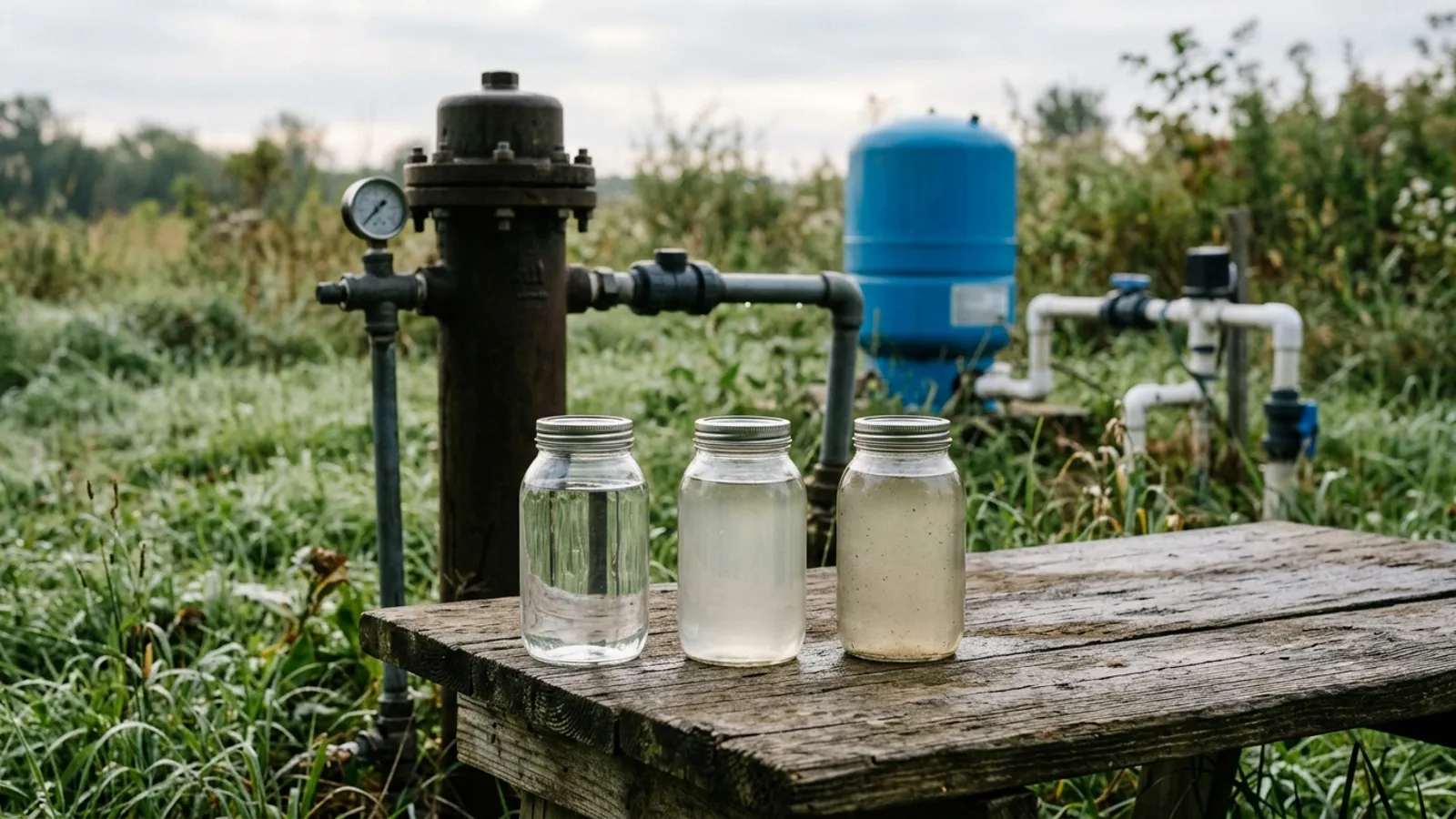
A practical guide to Consumer Confidence Reports, private well tests, contaminant limits, aesthetic issues, and the numbers that actually change which water filter you should buy.

Quick answer: Use the report to identify the contaminant first. Chlorine taste points toward carbon; nitrate, arsenic, fluoride, and high TDS usually push you toward reverse osmosis; bacteria or private-well concerns require testing and a treatment plan.

water reporttestingcontaminantsCCR
Best Water Filter Pitcher for PFAS and Lead: What to Check First
2026-07-05Final Decision

Best Water Filter Pitcher for PFAS and Lead: What to Check First

How to choose a pitcher or dispenser for PFAS and lead reduction, including certification claims, flow, cartridge cost, and brands like Clearly Filtered, ZeroWater, Brita and LifeStraw.

Quick answer: For PFAS and lead, do not choose a pitcher by brand alone. Choose the exact cartridge or pitcher model with the reduction claim you need, then compare speed, capacity, and replacement cost.

pitcherPFASleadrenters
Best Water Filter Brands 2026: Independent Shortlist by Filter Type
2026-07-05Shortlist

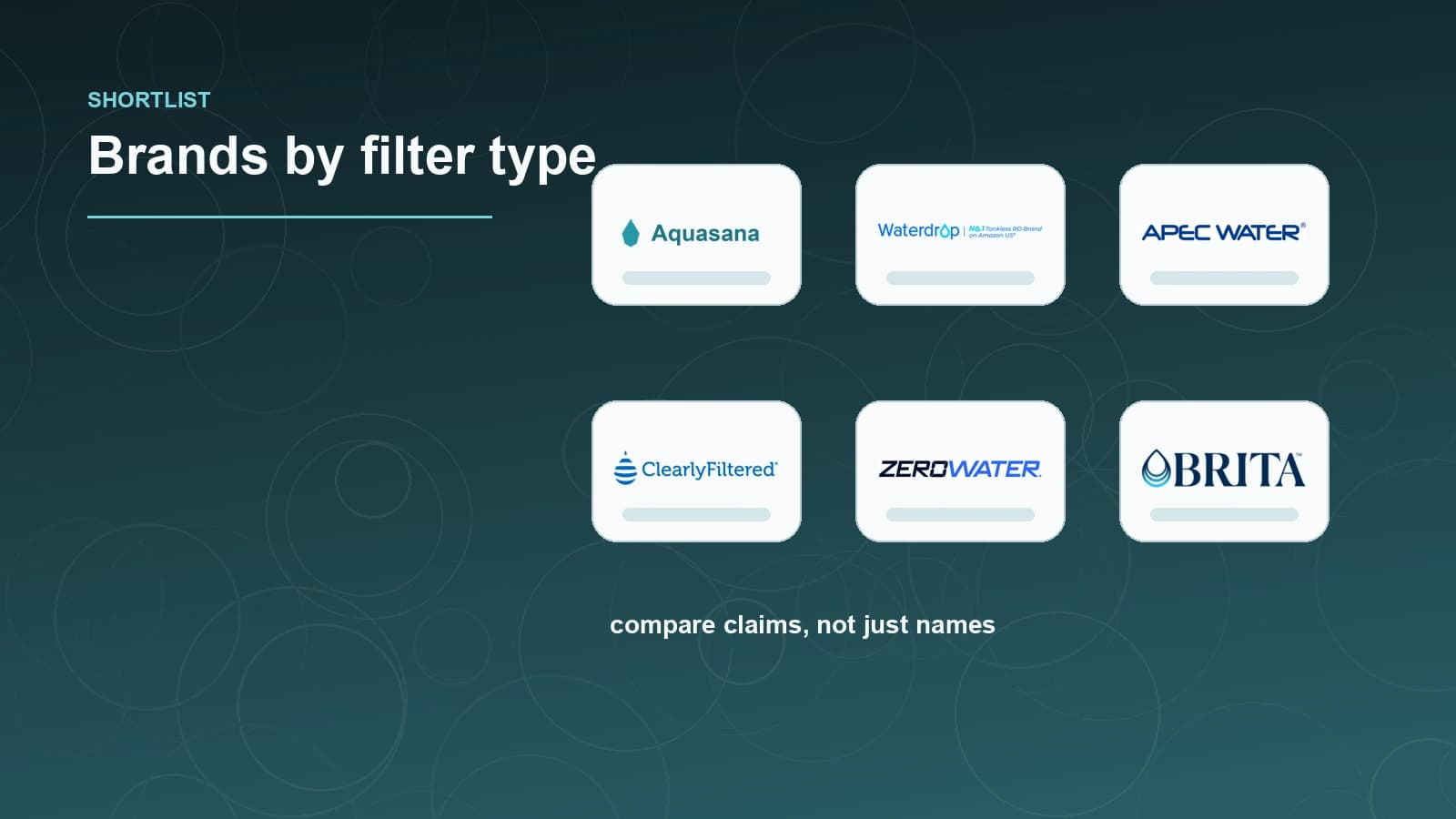
Best Water Filter Brands 2026: Independent Shortlist by Filter Type

The best water filter brands to compare in 2026, organized by pitcher, under-sink carbon, reverse osmosis, and whole-house systems with pros, cons, and buyer fit.

Quick answer: For under-sink carbon, start with Aquasana, Hydroviv, and Multipure. For reverse osmosis, compare Waterdrop, APEC, iSpring, and Brondell. For pitchers, compare Clearly Filtered, ZeroWater, Brita, PUR, and LifeStraw. For whole-house, compare SpringWell, Pentair, and Aquasana.

brandsroundupbest water filter2026