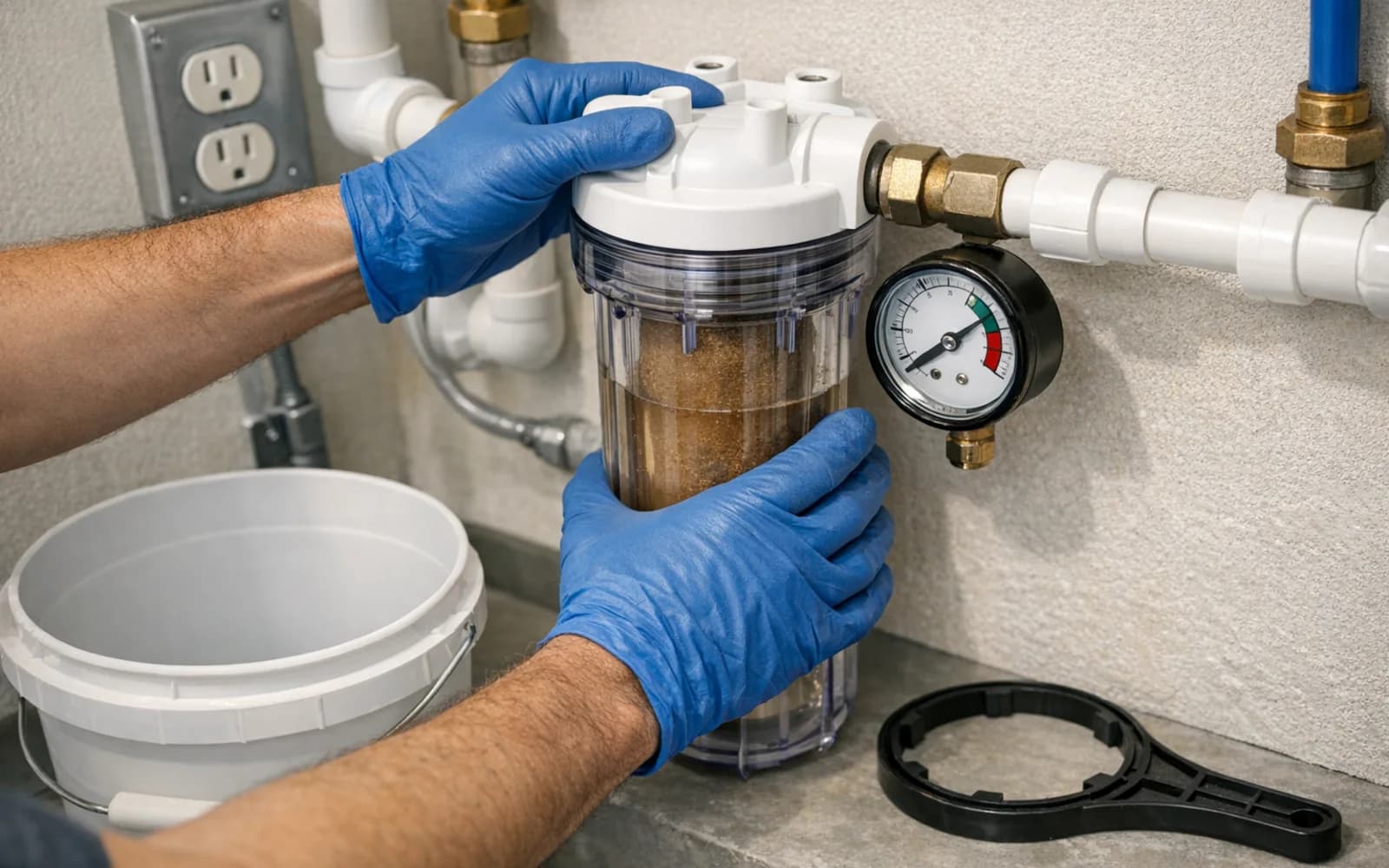
Water Filter Problems: Low Pressure, Bad Taste, Leaks
A symptom-to-fix guide for common water filter problems: low pressure, bad taste after install, leaks at fittings, slow RO fill, and when to change filters.
Install & Maintenance
Quick answer: Most water filter problems trace back to a clogged cartridge, a fitting that needs resealing, or a filter left in past its interval. Low pressure usually means a clogged filter or spent RO membrane. Bad taste after install is normal carbon dust that flushes out. Leaks are almost always the o-ring or thread seal.
Best for
Owners troubleshooting a filter that suddenly runs slow, tastes off, drips at a fitting, or fills too slowly, and anyone unsure how often to change each stage.
Wrong fit
Buyers still choosing a filter type; start with the filter-type and buying guides first.
Tradeoff
Most fixes are cheap and quick, but skipping maintenance intervals trades a small routine cost for pressure loss, bad taste, and leaks later.
The short answer
Nearly every common water filter complaint has one of three roots: a filter that is clogged or overdue, a fitting that is not sealed, or a system that simply needs to be flushed after a cartridge change. Work symptom by symptom before you assume anything is broken.
If your system is under warranty, check the manufacturer's guidance before opening sealed parts.
Symptom
Likely cause
First thing to check
Low pressure or slow flow
Clogged filter, or a spent RO membrane
Replace the oldest cartridge; note the last change date
Bad taste or odor after a new filter
Carbon fines and trapped air
Flush 2 to 5 gallons before drinking
Leak at a fitting
Loose nut, bad O-ring, or missing PTFE tape
Hand-tighten, reseat the O-ring, re-tape threads
Slow reverse osmosis fill
Low feed pressure, fouled membrane, or flat tank bladder
Check feed pressure and tank air charge (~7 psi empty)
Cloudy or milky water
Trapped air after a change
Run the tap a minute; it should clear
Low water pressure or slow flow
The most common complaint, and usually the easiest to explain.
Likely cause: a clogged sediment or carbon filter. As cartridges load up with particles, flow drops. This is expected near the end of a filter's life.
On reverse osmosis: slow flow at the faucet often means the RO membrane is fouled or near end of life, or the storage tank is low or has lost air pressure in its bladder.
Fix: replace the filter that is due. On RO, if new pre-filters do not restore flow, the membrane is the next suspect. Also confirm the feed valve is fully open and that a shutoff was not left partly closed after service.
If pressure was low from day one, the issue is more likely the incoming supply pressure or a partly closed valve than the filter itself.
Bad taste or odor after installing a new filter
Common right after a cartridge change, and usually harmless.
Likely cause: fine carbon particles (carbon fines) and trapped air from a fresh cartridge. New carbon can also make the first water taste dusty or gray.
Fix: flush the new filter before drinking. Run the system for the manufacturer's recommended time or volume, often several minutes, until the water runs clear and tastes normal. RO systems usually need the first full tank drained and refilled.
If a rotten-egg or sulfur smell appears and persists after flushing, that points to source-water or plumbing issues, not the cartridge. See the hydrogen sulfide well water filter guide for the cause and the right fix.
Leaks at the fittings
Almost always a seal issue, not a failed housing.
Likely causes: a missing, pinched, or dried-out o-ring; not enough thread sealant (PTFE / plumber's tape) on threaded connections; cross-threading from forcing a fitting; or a push-connect line that was not seated fully or was cut unevenly.
Fix: turn off the water and depressurize first. Reseat the connection. For threaded joints, clean the threads and apply fresh PTFE tape wound in the direction of the thread. Check that the o-ring is present, clean, and lightly lubricated where the manufacturer allows. For push-fit lines, remove the tube, cut a clean square end, and push it fully home.
Do not overtighten filter housings. Hand-tight plus the manufacturer's small extra turn is usually correct; forcing it can crack the housing or deform the o-ring and cause the leak you were trying to stop.
Slow reverse osmosis fill or little water at the faucet
RO is a slower process by design, but a noticeable slowdown has specific causes.
Likely causes: low incoming water pressure, a fouled membrane, clogged pre-filters starving the membrane, or a storage tank that has lost its air-bladder pressure so it no longer pushes water out.
Fix: replace overdue pre-filters first, since a clogged pre-filter shortens membrane life. Check the tank: if it feels heavy and full but delivers little water, the bladder pressure is likely low and needs to be checked against the manufacturer's spec with the tank empty. If flow is still poor with fresh filters and a good tank, the membrane is the likely culprit.
Many RO systems need adequate feed pressure to work well; very low household pressure can require a booster pump.
When to change each filter stage
Intervals vary by model and by how hard your water is, so treat these as general ranges and follow the manufacturer's schedule. Change sooner if flow drops or taste returns.
Sediment pre-filter: roughly every 3 to 6 months. It clogs first and protects the stages behind it.
Carbon filter: roughly every 6 to 12 months. Change when chlorine taste or odor returns.
RO membrane: roughly every 2 to 3 years, longer if pre-filters are kept fresh and feed water is not too hard.
Post / polishing filter: roughly every 6 to 12 months, often at the same time as the carbon stage.
UV lamp (if fitted): typically once a year, because output fades before the lamp visibly fails.
A spent filter is not just a flow problem. Carbon that is exhausted stops adsorbing and can eventually release captured contaminants, so overdue changes undo the reason you installed the filter. If you are unsure which stages your system has, the under-sink guide walks through a typical stack.
Frequently Asked Questions
Why is my water filter so slow all of a sudden?
A sudden slowdown almost always means a clogged filter reaching the end of its life, or on RO, a fouled membrane or a storage tank that has lost air pressure. Replace the overdue cartridge first, and confirm the feed valve is fully open.
Is it normal for filtered water to taste bad right after a new filter?
Yes, briefly. New carbon cartridges release fine carbon dust and trapped air, which can make the first water taste dusty. Flush the filter for the recommended time or volume until it runs clear. A smell that persists after flushing points to source water, not the cartridge.
How do I stop a water filter fitting from leaking?
Turn off the water and release pressure first. Reseat the connection, add fresh PTFE tape on threaded joints, and make sure the o-ring is present, clean, and not pinched. For push-fit tubing, cut a clean square end and push it fully in. Avoid overtightening, which can crack the housing.
How often should I change my water filter?
It depends on the stage and your water. As general ranges: sediment every 3 to 6 months, carbon every 6 to 12 months, RO membrane every 2 to 3 years, and UV lamps yearly. Follow the manufacturer's schedule, and change sooner if flow drops or taste returns.
These guides are built from manufacturer documentation, public specifications, primary research where health claims matter, and repeated buyer questions that show up in real ownership and installation decisions.
Manufacturer responses can clarify pricing bands, warranty terms, support footprint, or common mistakes. They do not move a page up the shortlist on their own.